My weaving practice
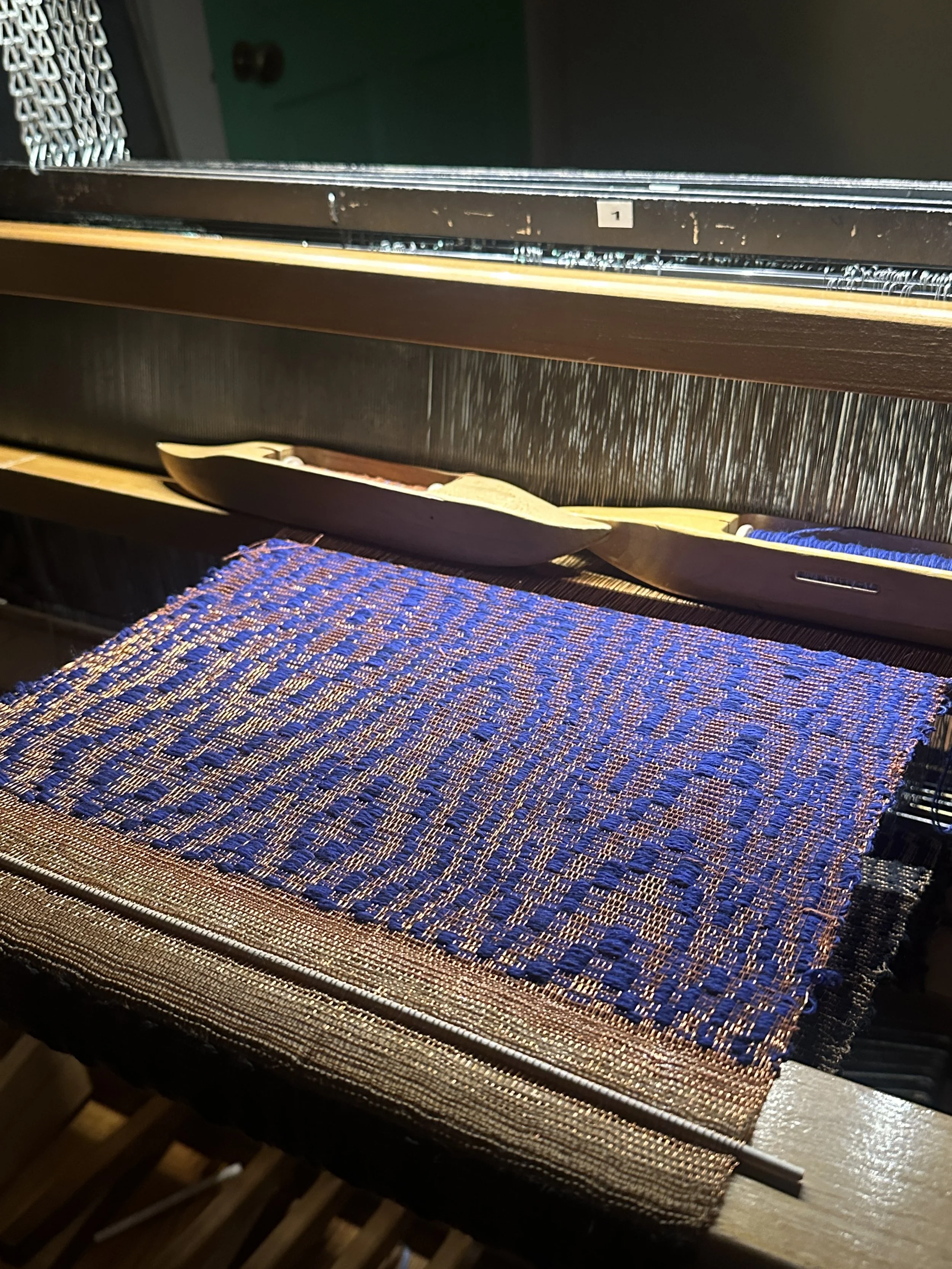
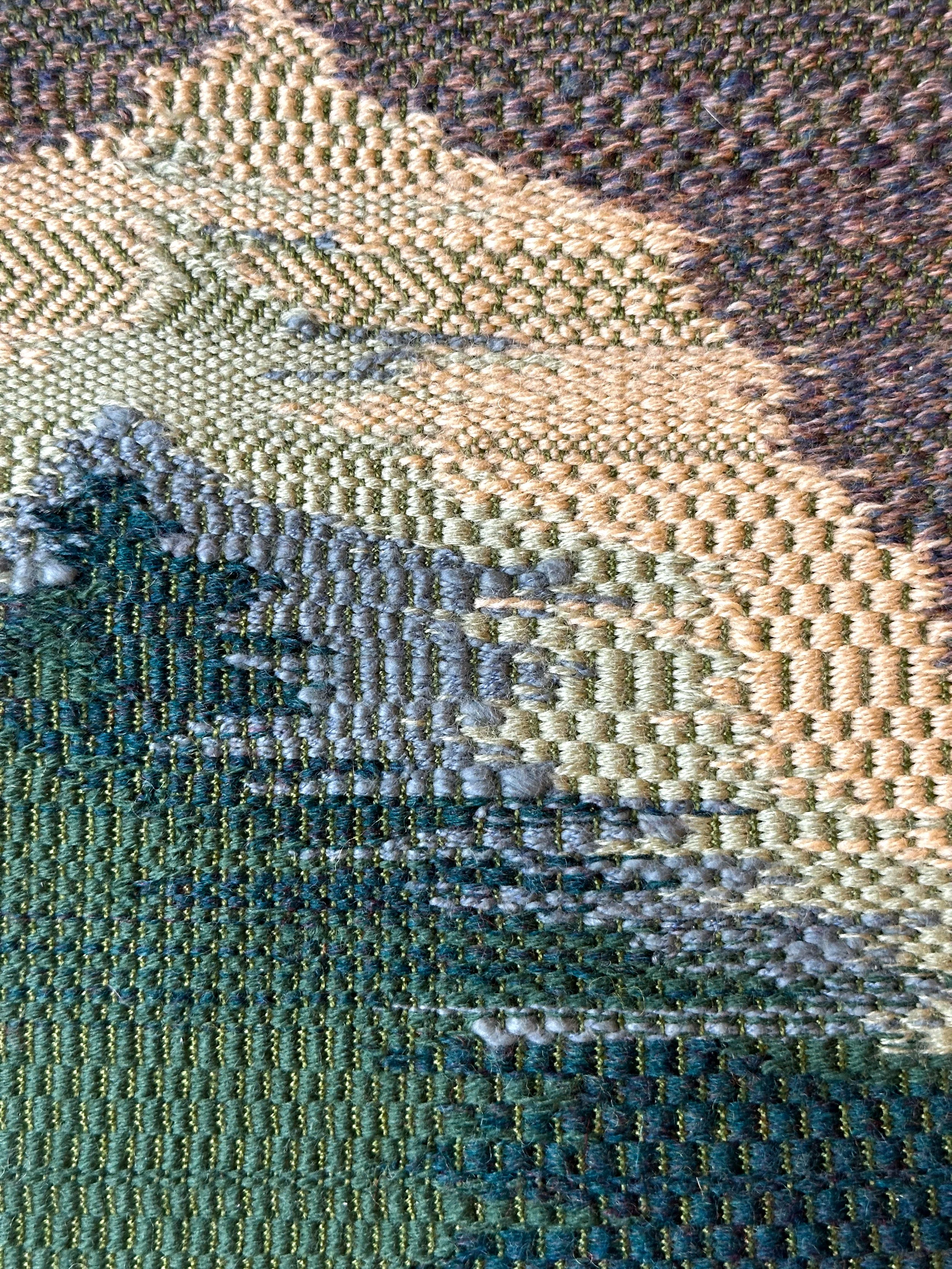
Weaving is an enigma of an artform. Its treasured beauty and alluring complexity distract from its high barrier of entry. Initially, the pure magic of making cloth gave way to transcending the technical divide. Learning harder techniques, and studying every variable from yarn weight, fiber content, and color interaction to weave structure, cloth density, and end use. Developing a sensitivity to these facets is the ultimate exercise. Weaving takes years to master, and perseverance to push through the trial and errors to find the peace in letting go. Being patient, and learning to recognize the chemistry that happens at this convergence of time and practice, that can only come through experimenting and openness.
There is deep technical acumen needing in weaving to acquire the skills to become a master weaver. A mind for numbers, layers, and patterns comes in handy.
The far reaching applications that textiles make possible, but also exploring the possibilities beyond the practical. The ability to essentially print woven material, on a primitive computer we call the loom. I got hooked on the endless possibilites of weaving.
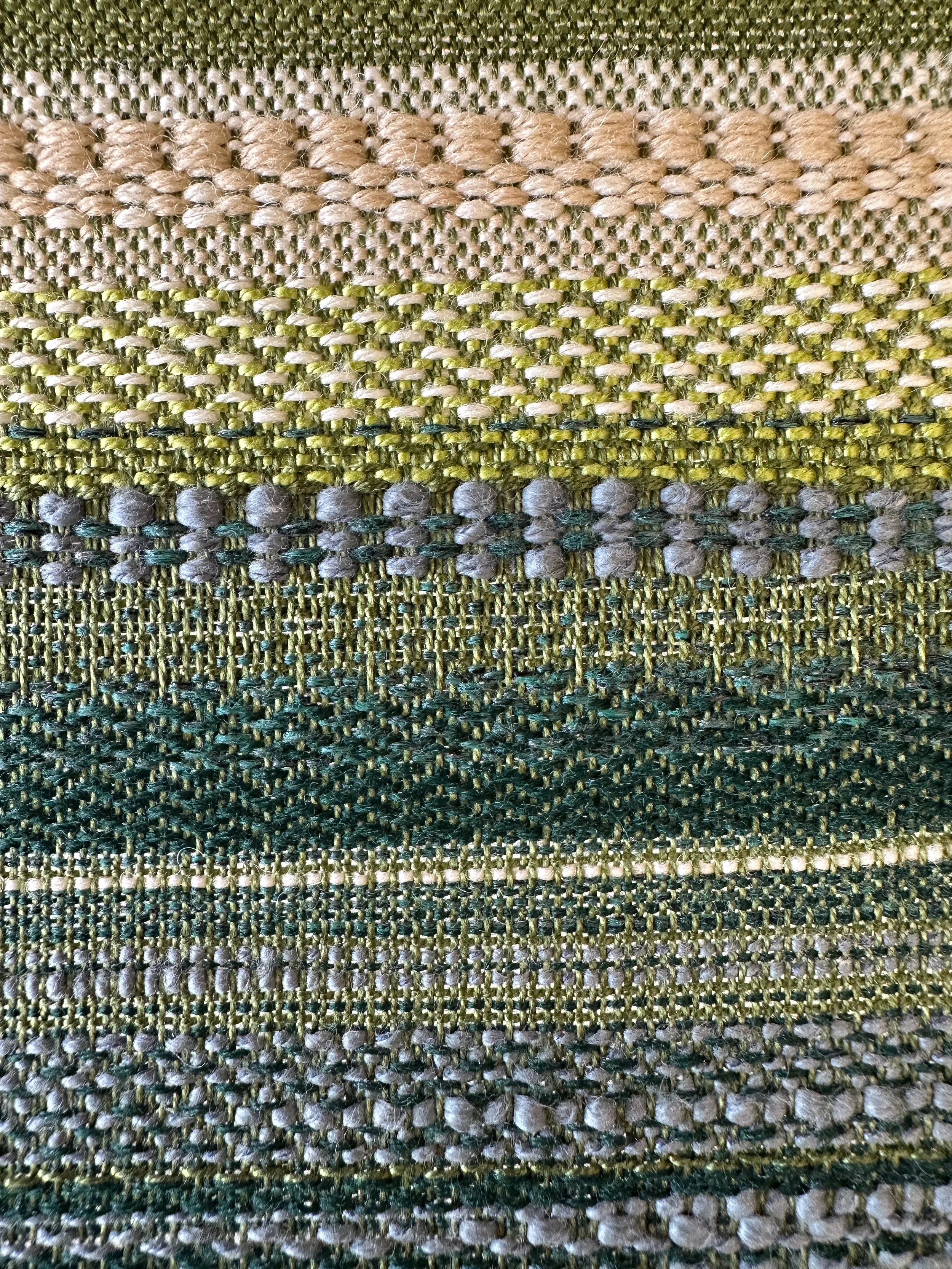
My first weave sample, experimenting on a 4-harness loom, I was interpreting textures of an ivy leaf in preparation for a tapestry.
The looms I learned on
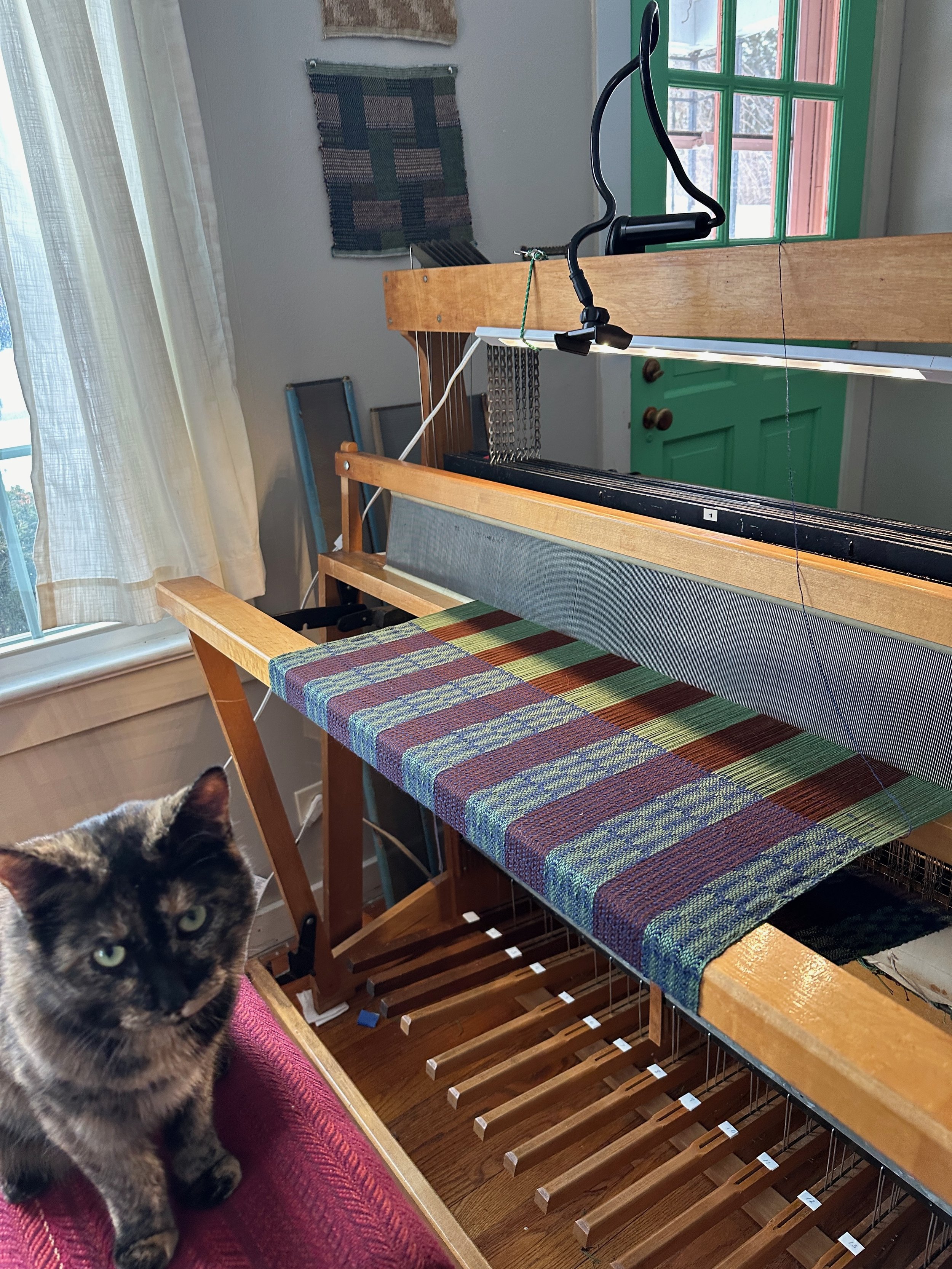
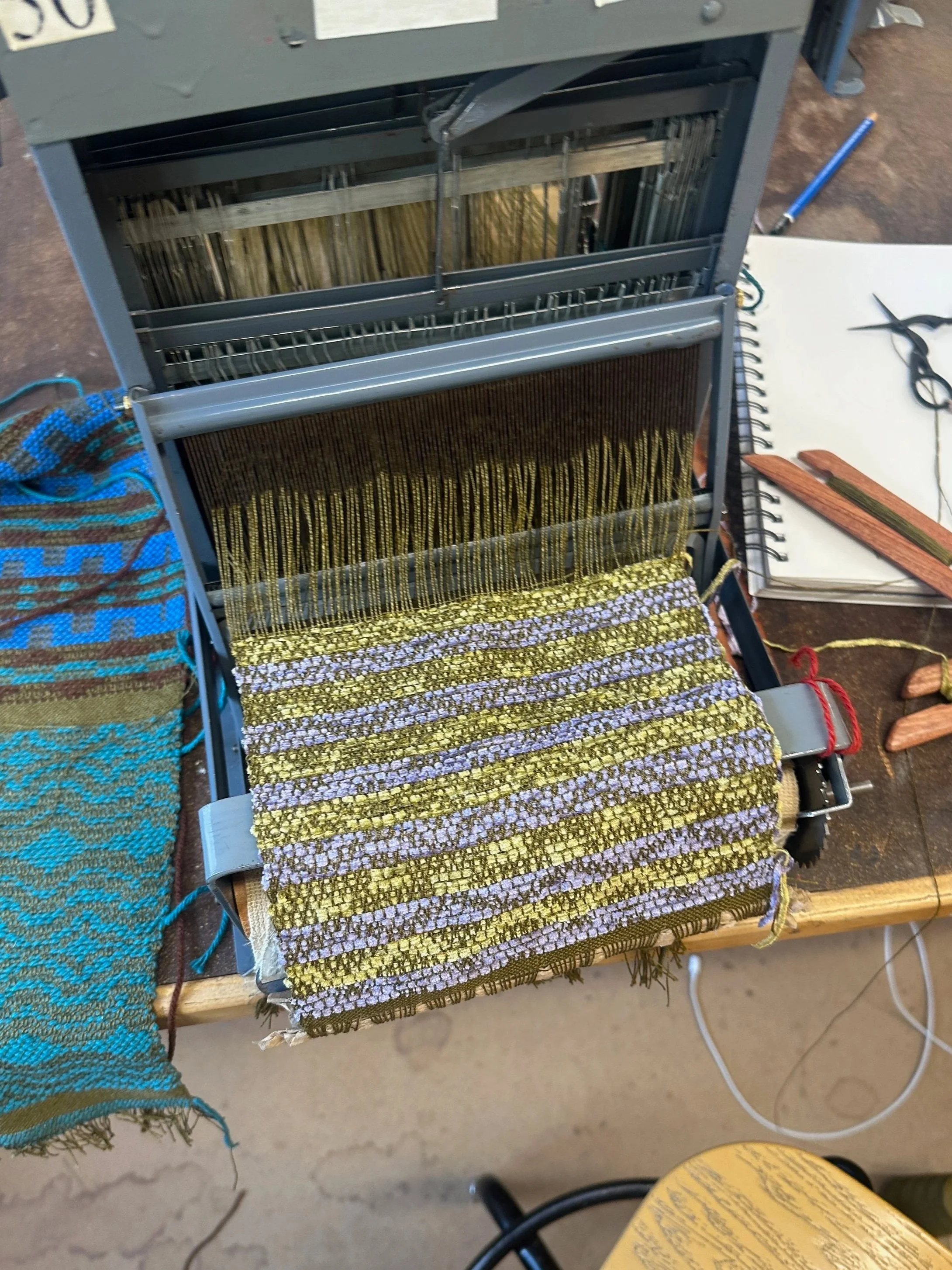
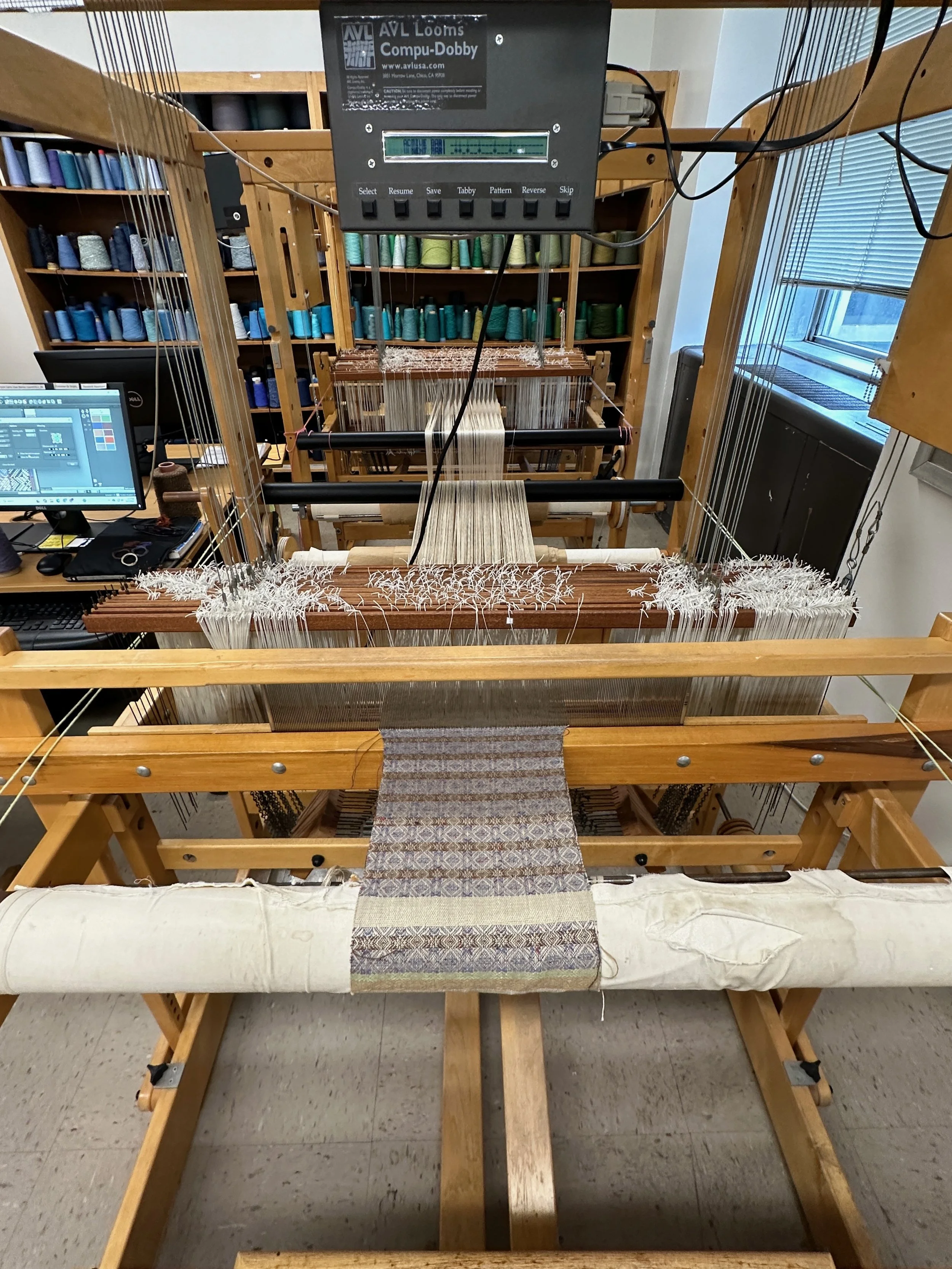
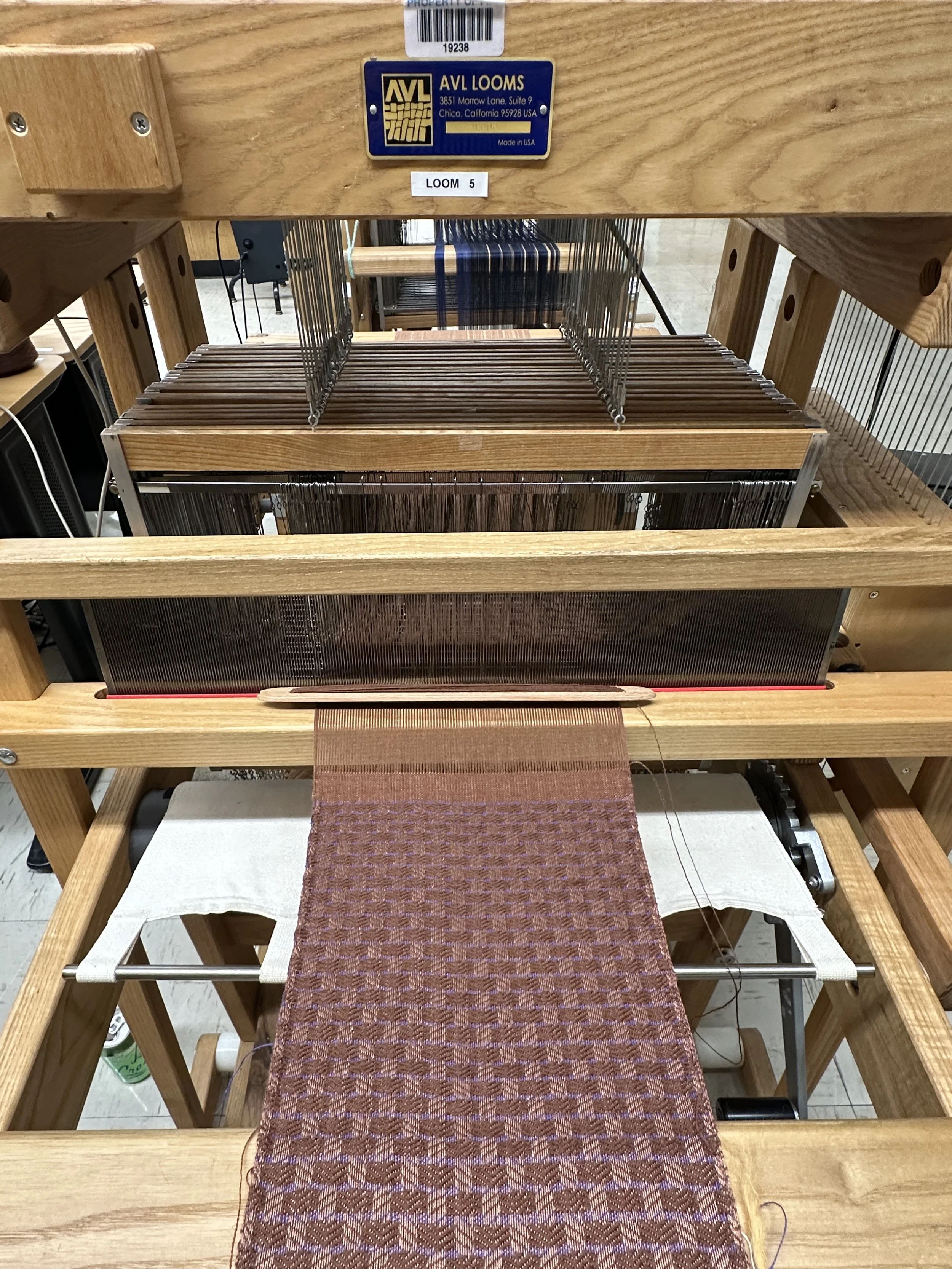
Left to Right: My first loom a Macomber the same kind I learned on, a metal 8 harness table loom, a 16 harness AVL dobby loom, and a 24 harness AVL dobby loom.